
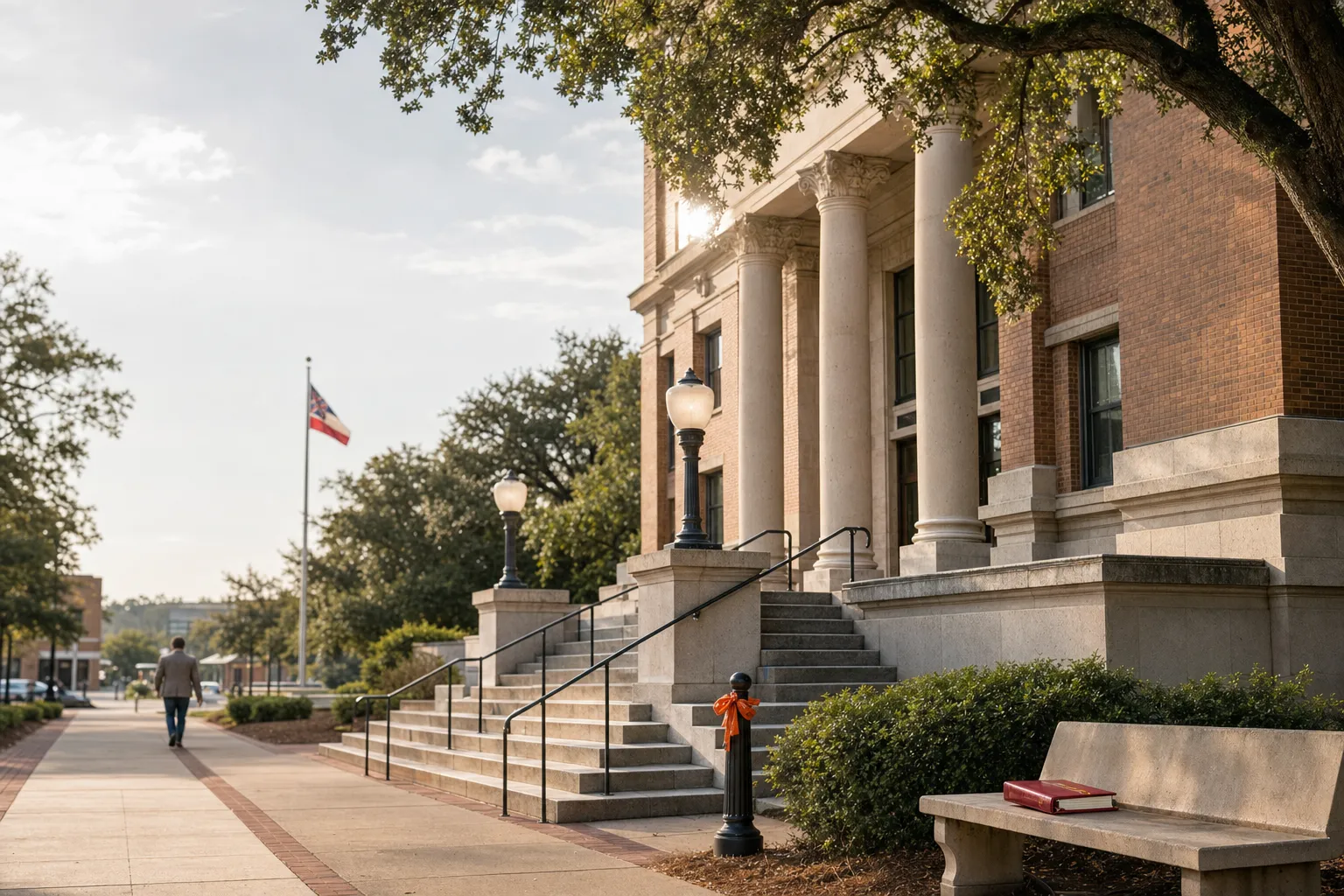
If you are arrested in Richland, Mississippi, the most important immediate steps are to remain silent and to ask for an attorney. We explain which rights apply, how to assert them, and why doing so early can change the course of a criminal case in Rankin County and the greater Jackson area.
What are your rights after an arrest?
When someone is arrested, they are protected by constitutional and state rules that limit police authority and preserve fairness. In plain terms, those protections include the right to remain silent, the right to a lawyer, limits on searches and seizures, and the right to review by a magistrate or judge. As criminal defenders, we focus on preserving every available protection from the moment someone is detained.
Core constitutional rights
- Right to remain silent. You do not have to answer questions about the alleged crime. Anything you say can be used against you.
- Right to an attorney. You can ask for a lawyer and stop questioning until your lawyer is present.
- Miranda warnings. Before custodial interrogation, law enforcement must inform you of your rights. If they do not, statements you make may be inadmissible.
- Protection from unreasonable searches and seizures. Police generally need a warrant or your clear consent to search private spaces, with limited exceptions.
State and procedural protections in Mississippi
Mississippi procedures affect how an arrest moves through the system. After arrest you typically see booking, an initial appearance before a magistrate or justice court, and decisions about bail or detention. As defenders, we look for procedural errors, unlawful searches, or failures to give required warnings that can affect evidence and outcomes.
Why these rights matter in Richland and Rankin County
Local practice and courthouse procedures shape how rights are enforced. Richland is part of the Rankin County and Jackson metro court ecosystem, where magistrates, prosecutors, and public defenders follow local calendars and enforcement patterns. How police handle an arrest in Richland, and how quickly the case reaches the local magistrate, can change what evidence is available and what arguments we can make.
We work across Hinds County, Madison County, Rankin County and the greater Jackson metro. That local focus means we know the people, schedules and common practices you are likely to meet after an arrest in Richland.
Key concepts to understand after arrest
- Custodial interrogation versus roadside questioning. Different rules apply depending on whether you are in custody.
- Probable cause. A judge must have probable cause to hold you beyond an initial appearance unless other legal grounds exist.
- Consent to search. Saying yes to a search usually waives the right to later seek suppression of what police find.
- Booking and fingerprints. Booking procedures are routine, but documentation at that stage matters for later challenges.
- Identification procedures. Lineups and photo arrays must be conducted fairly to avoid suggestive identification evidence.
Common mistakes people make after an arrest
Simple steps you should avoid
- Speaking to police without an attorney present.
- Consenting to searches of your phone, vehicle, or home.
- Posting details about the arrest on social media.
- Missing a first court date or a bail hearing.
- Giving statements to friends or family that you later repeat to investigators.
Pro tip: Saying very little and asking for an attorney right away preserves options. If police continue to question you after you ask for a lawyer, tell them you are refusing to answer until your attorney is present.
How asserting rights can change the outcome
Preserving rights can lead to exclusion of improperly obtained evidence, dismissal of charges, or stronger leverage in negotiations. For example, if a court finds that police conducted a search without lawful grounds, key evidence may be suppressed. Similarly, statements obtained after custodial interrogation without Miranda warnings may be inadmissible at trial.
Those legal results are not automatic. They require accurate fact gathering, timed filings, and courtroom advocacy. That is the work we perform from the first call through hearings and trial preparation.
How we handle an arrest case in the Jackson metro
When we represent someone arrested in Richland, we follow a clear process that protects rights and builds the factual record.
- Immediate intake. We gather a complete timeline, review officer reports, and identify witnesses and video sources.
- Early objections. We evaluate whether searches, interrogations, or identifications were lawful and file motions as needed.
- Investigative work. We interview witnesses, subpoena records, and collect independent evidence to challenge the prosecution narrative.
- Bail and bond strategy. We present facts and arguments at initial appearances and bond hearings to seek appropriate release conditions.
- Case resolution planning. Whether negotiating or preparing for trial, we outline risks and possible outcomes so clients and families can decide with confidence.
Our process reflects the firm focus on rigorous case preparation, strategic defense, and courtroom readiness described in our practice overview on the Criminal Justice Attorney page.
Learn more about how criminal proceedings typically move through the system on our Criminal Court Process resource.
Services that support rights preservation
Protecting rights after arrest often involves several areas of defense work. If you need help, we provide services that apply across these issues.
- Criminal Justice Attorney, for overall case strategy and representation.
- DUI Defense, where field tests and breath analysis raise specific Miranda and search questions.
- Felony Defense, for serious charges that carry major collateral consequences.
Related locations and practical steps
If you or a family member is arrested in Richland, we recommend checking local court calendars and arraignment schedules through the Rankin County court office and reviewing the arrest report carefully. For an overview of our service area and where we practice, see our locations page.
We represent clients across Hinds County, Madison County and Rankin County, and we handle cases that begin in Richland as they move through the Jackson metro court system.
Helpful external resources
For background on the rights police must give during custodial questioning, the Cornell Law School Legal Information Institute explains Miranda and custodial interrogation in clear terms. For employment and occupational context about lawyers and legal services nationally, the Bureau of Labor Statistics maintains up to date data on lawyers and the legal profession.
Frequently asked questions
What should I say to police at the scene of an arrest?
Tell officers your name and nothing more, say you wish to remain silent, and ask for an attorney. Avoid volunteering details about your activities, consent to searches, or explanations until you have legal counsel.
Do I have to sign police paperwork after an arrest?
Some forms are routine, but signing can be an admission. Ask for an attorney before signing anything that could affect your legal rights.
Will asking for a lawyer make the police more likely to charge me?
No. Asking for a lawyer is a constitutional right. It does not increase the likelihood of charges. It does protect you from self incrimination and improper questioning.
Can evidence be thrown out if my rights were violated?
Yes. Courts may suppress evidence obtained through unlawful searches, seizures or interrogations. Suppression depends on the facts and timely legal challenges.
What happens at an initial appearance or probable cause hearing?
The court reviews whether there is probable cause to hold you and addresses bail or pretrial release. This hearing is a critical early opportunity to challenge the legal basis for detention.
How quickly should I contact a lawyer after an arrest in Richland?
Contact an attorney as soon as possible. Early involvement lets us preserve evidence, identify witnesses, and raise prompt objections to unlawful procedures.
Key takeaway
Immediately after an arrest in Richland, remain silent and request an attorney. Preserving those rights gives us the best chance to challenge unlawful searches, suppress improper statements, and shape a favorable path through the Rankin County court system.
Find out more and check our local profile
Read client reviews, get directions, and view the firm location on The Yurtkuran Law Firm Google Business Profile. For more information about how arrests move through local courts, see our Criminal Court Process resource and our service pages.